Programme de gestion de la colère
Le programme de gestion de la colère est une formation structurée visant à aider les participants à mieux comprendre, apprivoiser ...
Show more

Instructor
Nina
- Description
- Curriculum
- FAQ
- Notice

What is the Anger Management Course?
The Anger Management Course is a structured, comprehensive online program designed to help individuals understand anger, recognize triggers, and develop practical skills for emotional regulation and long-term behavior change. While it is commonly used to fulfill court or probation requirements, it is also suitable for personal growth and self-improvement.
Is this course therapy or psychological treatment?
No. This course is educational in nature. It does not provide psychological or psychiatric diagnosis, psychotherapy, or legal advice, and it is not a substitute for professional mental health care. Participation does not create a therapist-client, psychologist-client, or lawyer-client relationship.
Who is this course intended for?
The course is suitable for:
- Individuals who have been court ordered to complete an anger management program;
- Participants on probation or parole;
- Individuals referred by lawyers, probation officers, social workers, employers, or support services;
- Anyone seeking to improve emotional regulation, communication, and conflict management in personal or professional settings.
- Individuals who have been court ordered to complete an anger management program;
- Participants on probation or parole;
- Individuals referred by lawyers, probation officers, social workers, employers, or support services;
- Anyone seeking to improve emotional regulation, communication, and conflict management in personal or professional settings.
Is this course accepted by courts?
The course is designed to meet the standards commonly required by courts, probation officers, and legal professionals across Canada. However, final acceptance is always at the discretion of the judge or authorized legal authority. Completion of the course does not guarantee any specific legal outcome.
Does completing the course guarantee a reduced sentence or dismissal?
No. Completing the course does not guarantee acquittal, discharge, sentence reduction, or any other legal outcome. Only a judge or authorized legal authority can make those decisions based on the full circumstances of a case.
How is the course structured?
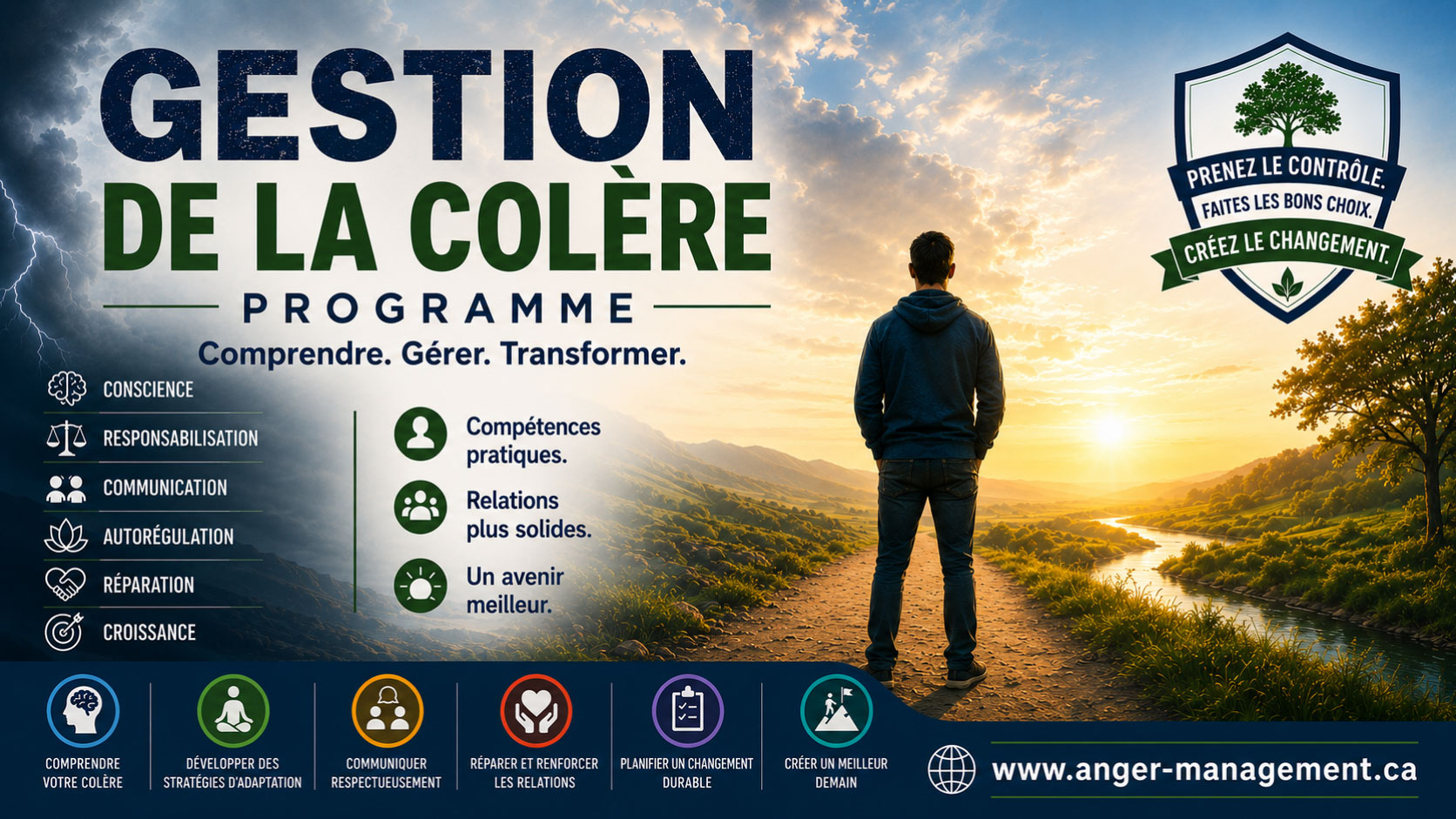
The course consists of six modules, covering:
- Understanding anger and emotional awareness;
- Legal and social consequences of unmanaged anger;
- Communication and conflict resolution;
- Coping skills and self-regulation techniques;
- Making amends and repairing relationships;
- Building a long-term anger management plan.
Each module includes educational content, reflection exercises, and practical tools.
- Understanding anger and emotional awareness;
- Legal and social consequences of unmanaged anger;
- Communication and conflict resolution;
- Coping skills and self-regulation techniques;
- Making amends and repairing relationships;
- Building a long-term anger management plan.
Each module includes educational content, reflection exercises, and practical tools.
How long does the course take to complete?
The course takes approximately 26 to 30 hours to complete, depending on reading speed and level of engagement with exercises. It is self-paced, allowing participants to progress at their own speed.
Is the course delivered online?
Yes. The course is delivered entirely online and can be accessed from computers, tablets, and smartphones. Participants can log in at any time and complete the course at their convenience.
What learning activities are included?
Participants engage in a variety of activities, including:
- Scenario-based quizzes;
- Journaling and reflection exercises;
- Guided self-regulation practices;
- Knowledge checks;
These activities are designed to reinforce learning and encourage personal insight.
- Scenario-based quizzes;
- Journaling and reflection exercises;
- Guided self-regulation practices;
- Knowledge checks;
These activities are designed to reinforce learning and encourage personal insight.
Is the course available in multiple languages?
Yes. To ensure accessibility and inclusivity, the course is available in:
English, French, Spanish, Arabic, Mandarin, Punjabi, Hindi, Armenian, Georgian, Turkish, Russian, and Ukrainian.
English, French, Spanish, Arabic, Mandarin, Punjabi, Hindi, Armenian, Georgian, Turkish, Russian, and Ukrainian.
Will I receive a certificate upon completion?
Yes. Upon successful completion of all modules and required activities, participants receive a bilingual Certificate of Completion (English and French), which can be downloaded, printed, or submitted electronically.
Can proof of completion be sent directly to a court or legal authority?
Yes. With participant consent, an official Court Reporting service can send proof of completion directly to a court, lawyer, probation officer, or other authorized party upon request.
How is confidentiality handled?
Participant confidentiality is taken seriously and respected within legal limits. Personal data, journal entries, quizzes, and reflections are stored securely and are not shared with third parties unless the participant provides authorization. Information may be disclosed to a court or authorized legal authority only with participant consent.
Is this course suitable for personal development even without legal involvement?
Yes. The course is also appropriate for individuals seeking to improve emotional awareness, reduce conflict, strengthen relationships, and build healthier communication habits in everyday life.
Clause de non-responsabilité : Rien dans ce programme ne doit être interprété comme un conseil juridique, un diagnostic psychologique ou psychiatrique, ou un substitut à la thérapie ou aux soins de santé mentale professionnels. Si vous avez besoin de conseils juridiques ou de soutien en santé mentale, veuillez consulter un avocat, un psychologue ou un thérapeute agréé. La participation à ce cours n'établit aucune relation professionnelle de nature juridique ou thérapeutique.